
- Wagering Requirements: 5x
- Min Deposit: None Required
New casino guide
New No Deposit Bonus Casinos For US Players 2026
New casinos launching in the US market run oversized no deposit bonuses to acquire first-mover players before word-of-mouth kicks in. That creates a short window where the offer terms are unusually player-favorable, but also raises the vetting bar because payout reliability and licensing history are unproven. This page tracks the recently-launched casinos currently running competitive NDB offers to US players, walks through how to safely try a new operator before committing real money, and shows you how to tell whether the promotional generosity translates into actual withdrawable cash.
 Written by
Patrick John
Last updated:
Written by
Patrick John
Last updated:
Best New No Deposit Bonus Casinos Available Right Now

- Wagering Requirements: 5x
- Min Deposit: None Required
- Wagering Requirements: 5x
- Min Deposit: None Required

- Wagering Requirements: 15x
- Min Deposit: None Required
- Wagering Requirements: 30x
- Min Deposit: None Required
- Wagering Requirements: 40x
- Min Deposit: None Required

- Wagering Requirements: 40x
- Min Deposit: None Required

- Wagering Requirements: 25x
- Min Deposit: None Required

- Wagering Requirements: 40x
- Min Deposit: None Required

- Wagering Requirements: 40x
- Min Deposit: None Required
What Makes A Casino Count As New In 2026
The new casino category covers three types of operator. Genuinely new launches are the ones getting a first license issue and their first real player traffic within the past 12 to 18 months. Rebrands are established operators launching a new brand under fresh naming while sharing the same back-end infrastructure and licensing entity. Group launches are new brands from an established operator group who share the parent group’s licensing but present as independent brands to players. Understanding which type an operator falls under changes the risk profile because the payout history behind the brand differs even when the launch date is recent.
New casino at a glance
| Genuinely new launch | First license issue and first real player traffic within the past 12 to 18 months. No pre-existing payout history to reference. |
|---|---|
| Rebrand of established operator | New name and site design, but same licensing entity, back-end infrastructure and payout track record as the previous brand. |
| New brand from operator group | Fresh player-facing brand launched by an established operator group. Shares parent group’s licensing and payout systems. |
| Typical NDB at launch | $25 to $150 in bonus credit, or 30 to 200 free spins. Wagering multipliers similar to established operators (25x to 50x on bonus). |
| Typical launch window generosity | First 90 to 180 days after launch, when the operator is competing hardest for initial player acquisition. |
Why New Casinos Offer Bigger No Deposit Bonuses
New casinos have one problem more acute than any other: they have no player base. Every operator, regardless of licensing or software stack, has to spend money to acquire that base. Established operators can rely on brand recognition and organic search traffic. New operators do not have either yet, so they compensate by offering larger no deposit bonuses to reduce the friction on first signup. The strategy is straightforward: the bonus is a customer acquisition cost, and a $100 cash-value NDB attracting a player who becomes a $2000-lifetime-value customer is a positive-return investment even if the bonus itself is paid out to a share of players who never deposit.
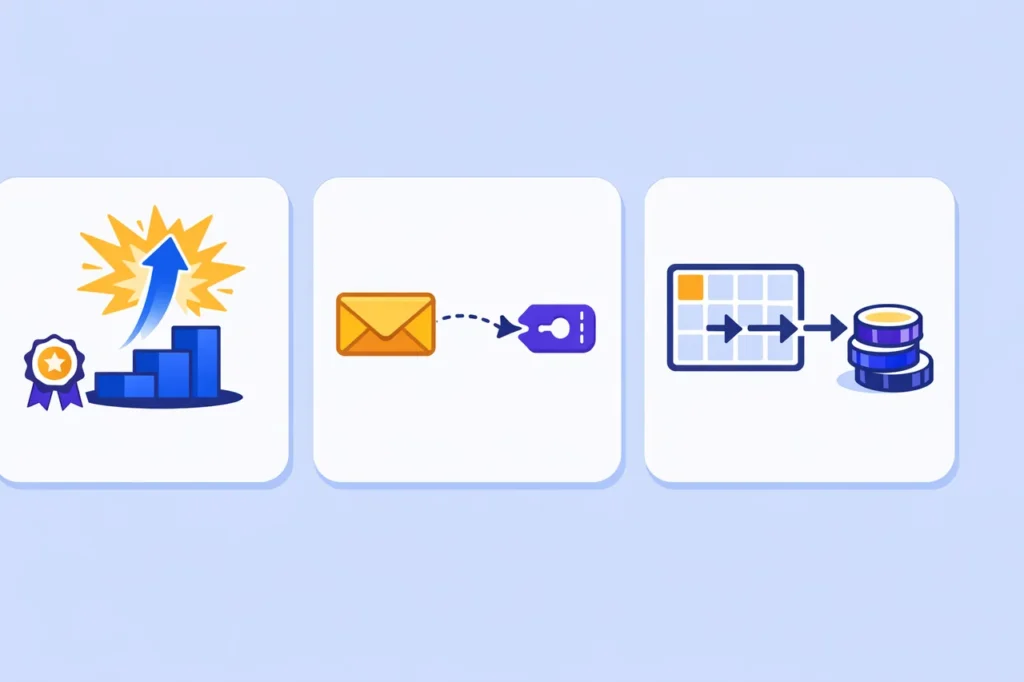
Launch bonus vs invitation code vs first-month promo
How the three new-casino NDB structures compare across the terms that matter.
| Feature | Biggest Launch bonus | Invitation code | First-month promo |
|---|---|---|---|
| Availability window | First 90 to 180 days after operator launch, then typically retired. | Limited-time, often channel-specific (affiliate campaigns, referral programs). | Available for the first month after signup, sometimes extending to first 60 days. |
| Typical headline size | $75 to $150, or 100 to 200 spins | $25 to $75, or 25 to 100 spins | Weekly refreshes of 25 to 50 spins or $10 to $25 credits |
| Wagering multiplier | Often lower than established operators (20x to 35x) to accelerate first-cashout | 25x to 40x on bonus amount | 30x to 45x per weekly refresh |
| Player-friendly signal | Strong. Operator wants first cashouts to happen so word-of-mouth is positive. | Moderate. Often ties into referral or affiliate volume rather than direct acquisition. | Strong for retention. Signals operator is invested in early player relationship. |
| Best for | Players willing to try an unproven operator for the biggest headline number. | Players who found the operator through a specific channel or referral. | Players staying with the operator past initial signup and building weekly play habits. |
New-casino NDB terms move faster than established operator terms; the numbers above are typical starting points and rotate as launch strategy matures.
The launch bonus is where new casinos put the marketing budget. Operators launching in Q1 to Q3 2026 have consistently offered NDB sizes 50 to 100 percent above the established-operator average as a first-90-day strategy. That generosity does not sustain past the initial acquisition window. The invitation code and first-month promo formats are separate tools, aimed at specific channels or player retention rather than raw acquisition, and typically stay in place beyond the launch window as part of ongoing operator strategy.
How To Safely Try A New Casino Before Depositing
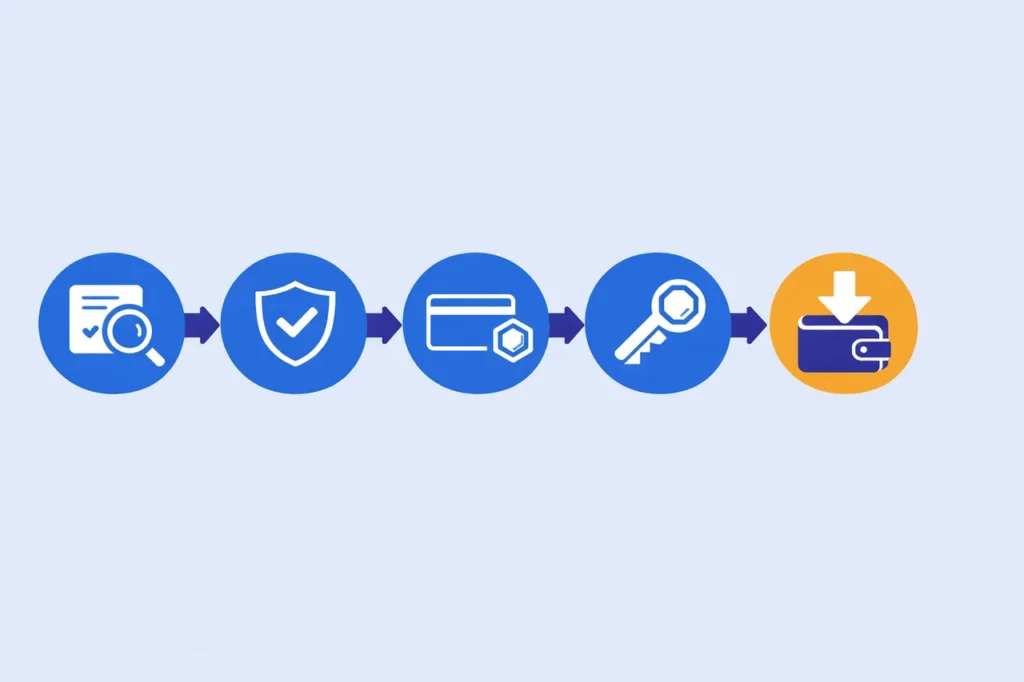
Every new casino is unproven at launch by definition. The vetting process before you claim an NDB and give the operator your details takes about 15 minutes and catches almost every red flag that shows up later at cashout. Five checks below cover the reliable path from finding a new casino name to claiming its bonus with confidence.
-
Check the license and operating entity
The footer should list a specific license number (Curacao, Anjouan, Kahnawake, MGA) plus the operating entity’s registered name and address. A license number that clicks through to an active status page at the issuing authority is a strong signal. Missing or unclickable license badges are a walk-away.
-
Search the operator name plus payout
Look for player-report threads in independent forums or dispute databases within the past 30 to 90 days. New operators will have limited results by definition; what matters is whether the results that exist show successful cashouts or unresolved complaints. Zero results is neutral; consistently negative results after 60 days of live traffic is a strong walk-away.
-
Inspect the payment methods offered
Established payment processors do due diligence before onboarding operators. If the cashier shows major crypto rails (Bitcoin, Litecoin, USDT) plus traditional bank wire, the operator has passed processor-level vetting. Cashier options limited to obscure crypto tokens or unusual e-wallets with no known payment partners is a soft flag.
-
Read the NDB terms in full
New operators occasionally publish generous headline offers with hidden discretionary voiding clauses in the terms. Look for phrases like reserving the right to void the bonus for any reason, unlimited KYC document requests, or unusual max-bet caps at $1 per bet. These are structured to justify non-payout regardless of player behavior.
-
Test the payout with a small win
Claim the NDB, clear wagering with a small enough win that the cap is not the limit, request the withdrawal, and time how long verification and payout take. A payout that completes within the operator’s stated window (usually 24 to 72 hours for crypto, 3 to 5 business days for bank wire) confirms the pipeline works. Payout delays beyond stated windows are the earliest reliable warning of operator issues.
KYC And Payout Reliability With New Operators
New casinos face two operational hurdles that show up as friction at the cashout stage. Their KYC teams are usually small and processing documents slower than established operators. Their payment relationships with processors are newer, so payout rails are more likely to experience batching delays or occasional failures that get resolved but add 24 to 48 hours to the timeline. Neither is a red flag on its own; the red flag is when a new operator refuses to answer support inquiries about pending payouts or repeatedly requests additional documents beyond the standard photo ID plus proof of address plus optional selfie.

What to expect at first cashout
Verification on a first cashout at a new casino typically requests photo ID (passport or driver’s license), a proof of address dated within the last three months (utility bill or bank statement), and occasionally a selfie holding the ID for identity confirmation. Documents get uploaded through the cashier or a linked verification portal. Standard turnaround is 24 to 72 hours after upload; new operators sometimes take longer during initial launch as their KYC team is still scaling. Once verified, crypto payouts are typically processed within 24 hours; bank wire takes three to five business days.
The same wagering and cap principles apply to new-casino NDBs as to established operator offers. Plug the specific offer terms into our bonus calculator to see the total wagering volume, expected cost to clear, and pace. Real money NDBs at new casinos are covered on our real money no deposit bonus page; free spin offers at new casinos are covered on our free spins no deposit bonus shortlist.
How The US New-Casino Market Actually Works
Almost all new casinos launching to serve the US market in 2026 are offshore-licensed operators based in Curacao, Anjouan, or Kahnawake. Most run the Realtime Gaming software stack that dominates US-facing offshore, though a few newer launches are using alternate stacks like Betsoft or Rival. State-licensed operator launches in the seven regulated markets are much rarer and typically come through established operator groups extending their brand portfolio, not genuinely new entities.
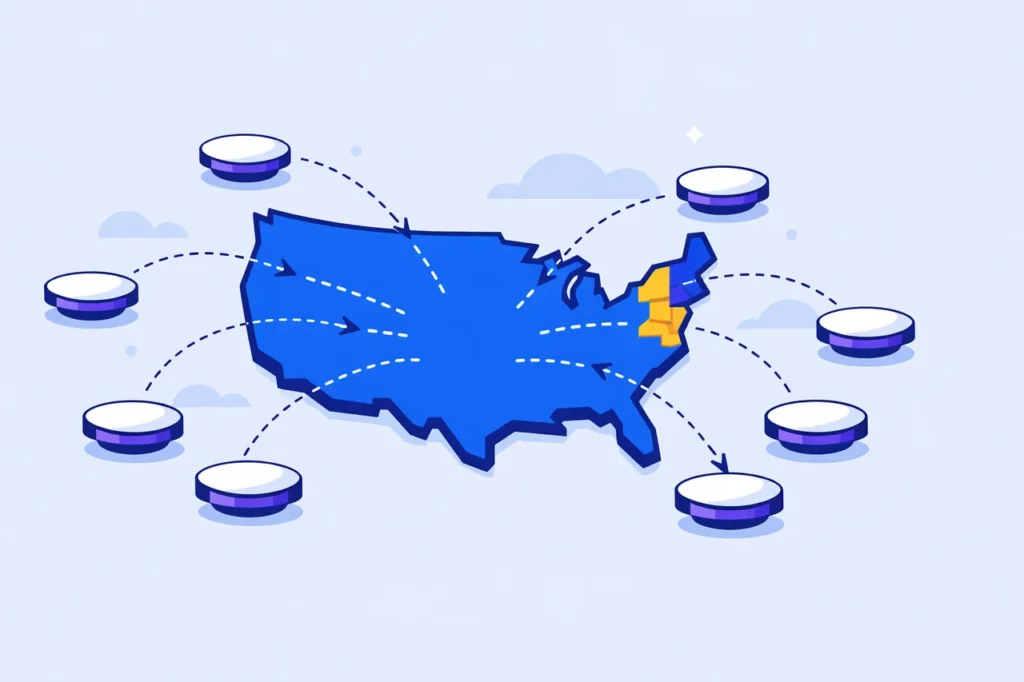
Offshore launches drive the new-casino market
New offshore casinos launching in 2026 typically come from three sources: independent operators seeking a US-facing license and building from scratch, existing operator groups extending their portfolio with a fresh brand, or software providers vertically integrating from platform-only to platform-plus-operator. Regardless of source, the launch strategy is similar: aggressive NDB to acquire first players, crypto-favored payment rails from day one, and a first-90-day promotional calendar that fades into standard operator promotions once the initial acquisition push completes. Player access is legal from the player side across US states with rare exceptions; our where online casinos are legal guide covers the state-by-state picture.
State-licensed new launches are rare in 2026
The seven states with regulated online casino markets (Connecticut, Delaware, Michigan, New Jersey, Pennsylvania, Rhode Island, West Virginia) see occasional new brand launches through established operator groups extending their portfolio. These are technically new brands but share the parent group’s licensing, back-end platform, and payout history. Genuinely new state-licensed operators (a first license issue at the state regulator) are uncommon because the regulatory approval process runs 12 to 24 months, which discourages small-scale new entrants.
What To Look For In A New Casino No Deposit Bonus
The generosity of a new-casino NDB is only meaningful if the operator honors it. The signals that separate legitimate new launches from unreliable ones are the same signals covered in the vetting checklist above, but with specific weights applied to promotional generosity itself.
Green flags vs red flags at new casinos
Signs the new casino is worth trying
6
- Verifiable license number that clicks through to an active status page at the issuing authority
- Standard crypto payment rails (BTC, LTC, USDT) plus at least one traditional payment option
- NDB wagering multiplier 30x or lower on bonus-only base
- NDB cashout cap of 5x the bonus amount or higher
- Terms document is standard length with clear language and no discretionary voiding clauses
- Operator publishes an established software provider on the platform (RTG, Betsoft, Rival, or similar)
Red flags to walk away from
6
- License badge is decorative only, does not link to an active regulator status page
- Cashier limited to obscure crypto tokens or unusual e-wallets with no known payment partners
- NDB wagering over 60x or applied to deposit-plus-bonus formula on a no-deposit offer
- NDB cap below 2x bonus, combined with high wagering
- Terms include broad discretionary voiding language allowing bonus cancellation for any reason
- Operator does not name its software provider or lists unknown providers only
Every new casino on the shortlist above passes the vetting checklist plus a payout test with a small first cashout before making the list. Operators that fail either check do not appear here regardless of how generous the promotional headline is. That is the difference between a shortlist that reflects real player outcomes and a shortlist that just publishes the largest current NDB advertised in the US-facing market.
How We Vet New Casinos Before Shortlisting
Every new operator that makes the shortlist above passes a consistent vetting process before their offer is published. The vetting weights license verification and payout completion above promotional generosity, because a large NDB from an operator that does not pay is worth less than a modest NDB from one that does.
Our new-casino vetting criteria
How each new operator is evaluated before making the shortlist.
-
License verification with issuing authority
License number cross-referenced against the issuing regulator’s active-license list. Operators using inactive, revoked, or unlisted license numbers do not make the shortlist regardless of how established the branding appears.
-
Live payout test with first cashout
A small NDB is claimed, wagering cleared, KYC completed, and withdrawal requested. Successful completion within the operator’s stated payout window is a required criterion. Operators that fail this test do not appear here regardless of offer size.
-
Terms clarity and voiding language
Terms document reviewed for broad discretionary voiding clauses, unusual max-bet caps designed to fail, and excluded games lists longer than eligible games lists. Operators with hostile terms language are excluded even when license and payout check out.
-
Software provider transparency
Established software providers (Realtime Gaming, Betsoft, Rival, Pragmatic Play, and similar) do due diligence before licensing their platform to operators. Presence of a known provider is a soft signal in favor; operator running an unnamed or unrecognized platform is a soft signal against.
-
Ongoing payout monitoring
After initial shortlist entry, payout performance is monitored across independent player-report databases. Operators whose payout reports deteriorate over 30-day windows are removed from the shortlist rather than being left in place to catch traffic on aging content.
New No Deposit Bonus Casinos FAQ
Player acquisition costs. New casinos have no player base and no brand recognition, so they compensate by offering larger NDBs to reduce signup friction. The generosity is a customer acquisition strategy that fades once the operator’s brand recognition builds. Established operators can attract signups through brand and search alone, so their NDB spend is smaller as a percentage of overall marketing.
Less proven, not necessarily less safe. A new operator with proper licensing, standard payment rails, and clear terms operates the same as an established one; there just is not enough payout history yet to demonstrate reliability. The vetting checklist covered above (license verification, payment rails, terms review, small payout test) catches almost every red flag before you commit real money.
Six to twelve months of consistent payout performance across independent player-report databases usually moves a new operator from unproven to reliable. Rebrands and group launches (where the operating entity has an existing track record) prove themselves much faster because the underlying reputation transfers.
Usually the same libraries, sometimes updated faster. New operators using established software providers (Realtime Gaming, Betsoft, Rival, Pragmatic Play) get the same slot catalog as any other operator on those platforms. What changes is which new slots hit the operator first; some new casinos prioritize rapid catalog updates as a differentiator, others deprioritize it in favor of promotional generosity.
A genuinely new casino has a first license issue and no prior operating history. A rebrand keeps the same licensing entity, back-end platform and payout systems but changes the player-facing brand name and design. Rebrands are lower risk because the underlying operating history transfers; genuinely new operators require the full vetting checklist because no history exists to reference.
A single successful payout is a good signal but not a guarantee. Operators seeking to establish reputation deliberately honor early cashouts to build word-of-mouth, and only later shift toward hostile behavior at higher volumes if they were never intending to run legitimately. Monitor payout reports over the first 30 to 60 days after your first cashout; consistent successful payouts across multiple players is a stronger signal than one personal transaction.
New offshore casinos serving US players typically accept players nationwide with rare exceptions for specific state exclusions in their terms. State-licensed new launches in the seven regulated markets (Connecticut, Delaware, Michigan, New Jersey, Pennsylvania, Rhode Island, West Virginia) are geolocation-locked to their licensing state. Check each specific operator’s state acceptance policy before signup.